


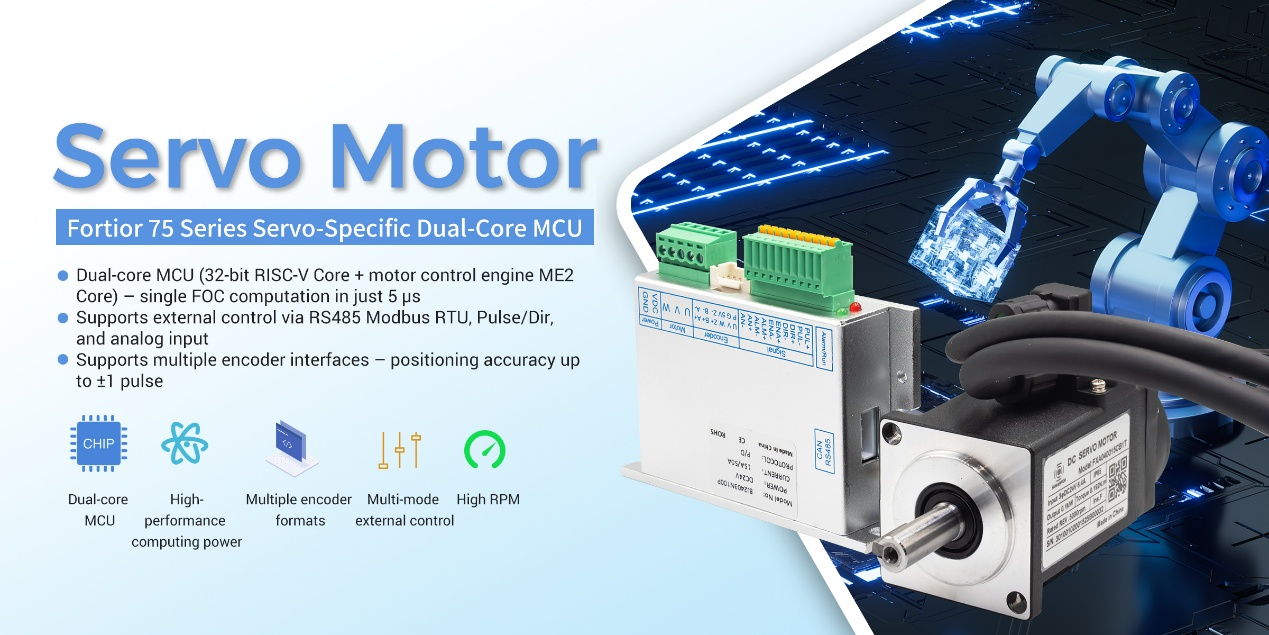
In June 2026, Fortior Tech (A-share: 688279.SH; H-share: 1304.HK) is pleased to announce a strategic collaboration with Banana Pi, a globally recognized leader in the open-source hardware community, to unveil the BPI-VP10 platform. This open-source low-voltage servo drive platform is now live on the Banana Pi official documentation center, providing the global developer community with full access to comprehensive design resources. BPI-VP10 serves as a turnkey, highly customizable foundation for advanced applications in industrial control, robotics, and intelligent hardware.
Chinese Documentation: https://docs.banana-pi.org/zh/BPI-VP10/BananaPi_BPI-VP10
English Documentation: https://docs.banana-pi.org/en/BPI-VP10/BananaPi_BPI-VP10
Forum: https://forum.banana-pi.org/c/servodrive/bpi-vp10/142
Proprietary Chip Foundation for Open-Source Full Stack
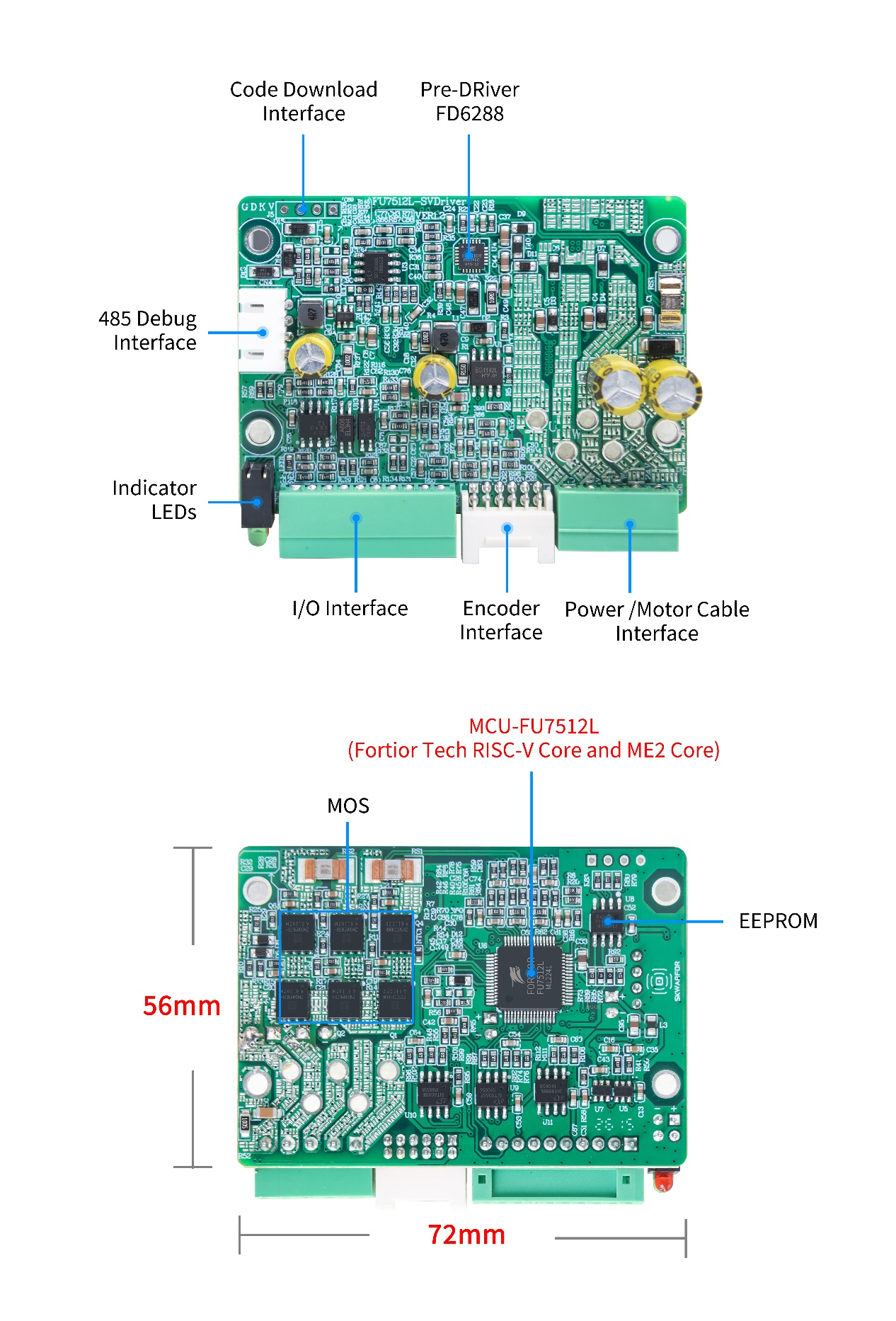
BPI-VP10 is developed based on Fortior’s FU7512L master control MCU and the FD6288Q pre-driver. FU7512L, one of the FU75 series of dual-core MCUs tailored for servo applications, integrates a 32-bit RISC-V core with a dedicated Motor Control Engine (ME2). Delivering a single-loop FOC execution time of just 5 µs, it provides a robust, low-latency computational foundation for triple-loop control (current, velocity, and position).
In terms of openness strategy, the platform adheres to a "transparent core" philosophy, with three categories of key assets now publicly released via the Banana Pi community:
Software layer: Full firmware source code, including servo control algorithms and the Modbus-RTU protocol stack. The well-structured code is accompanied by comprehensive architectural documentation to facilitate a rapid system-level understanding for developers.
Hardware layer: Complete schematic design files. By detailing the power stage, signal chain, and interface protection circuitry, the documentation allows developers to analyze the hardware architecture and perform peripheral adaptation or interface expansion.
Tools layer: A comprehensive toolchain and accessory ecosystem. Ranging from servo motors and mechanical housing (sheet metal) to PC-based tuning software and chip emulators, these resources are designed to support both independent exploration and rapid product deployment.
With this open asset set, users have the flexibility to inspect and modify the entire system, enabling a deeper understanding of both system implementation and underlying design principles.
Hardcore Versatility for Full-Scene Coverage
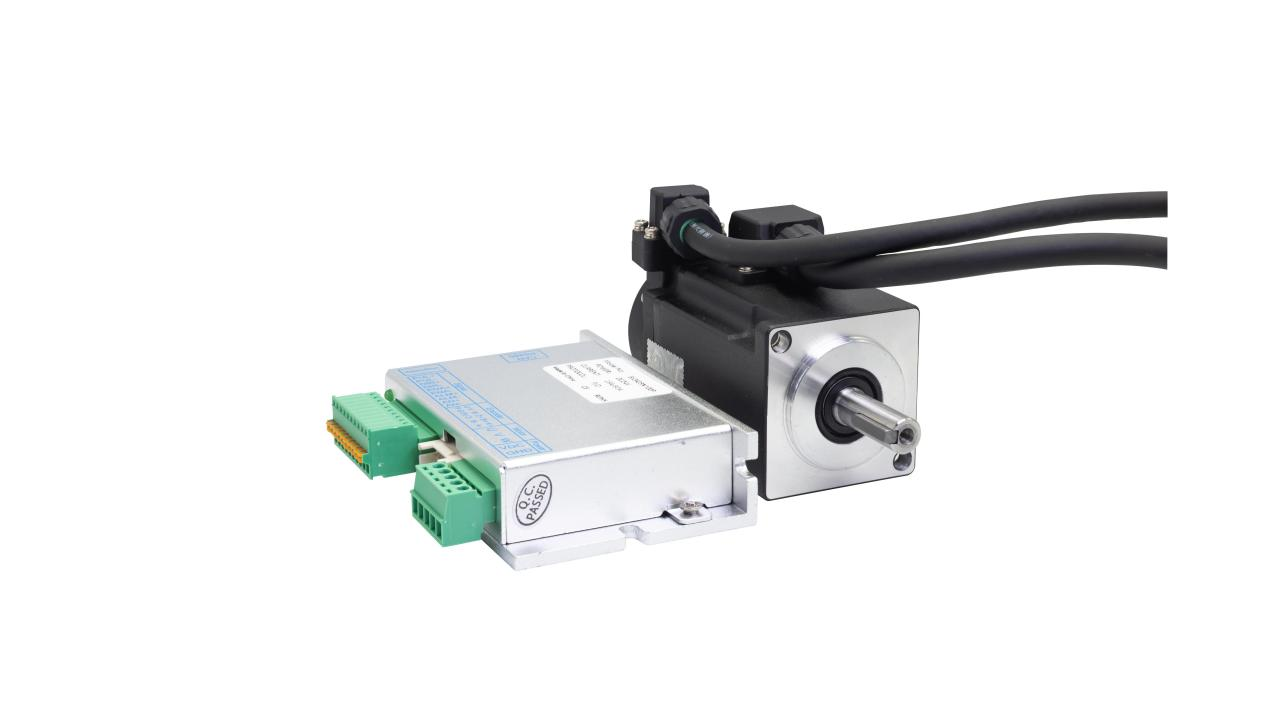
BPI-VP10: A cost-effective solution for 100W/200W servo applications
· High-efficiency FOC: Features the Fortior’s proprietary dual-core MCU (FU7512L) and hardware-accelerated vector processing. With a FOC execution cycle of just 5 µs, it ensures high-speed, real-time response.
· Versatile control interfaces: Supports pulse/direction, analog (0–10V), and RS485 (Modbus-RTU) modes, facilitating seamless integration with traditional PLCs, direct speed control, and multi-axis networked control.
· Comprehensive encoder compatibility: Supports absolute encoders, incremental encoders, and Hall-based encoders. Achieving a positioning precision of ±1 pulse, a single drive board effectively scales from basic speed control to high-precision absolute positioning.
· Wide power output range: Delivers a rated current of 15 Arms and a peak current of up to 50 Arms, with a maximum speed of 6,000 rpm, ensuring reliable performance across diverse, dynamic load scenarios.
Open-Source Enablement for Servo Applications: Driving Industrial Innovation
BPI-VP10 is released under the BSD-3-Clause license, offering a compelling value proposition across diverse user segments:
· Enterprise developers: Can integrate the platform as a mature drive core into proprietary systems, significantly accelerating time-to-market and reducing R&D overhead.
· Equipment manufacturers: Gain full access to technical design documentation, effectively mitigating supply chain dependency risks while ensuring long-term product maintainability.
· Deep customizers: Benefit from the freedom to modify control algorithms and interfaces to develop highly differentiated solutions.
The openness of BPI-VP10 extends beyond mere documentation. This launch marks the foundational step in building a flourishing ecosystem between Fortior Tech and Banana Pi. By integrating proprietary chips into transparent, modular reference designs, both parties aim to cultivate a collaborative community where developers contribute ongoing insights and real-world optimizations. This effort seeks to foster a healthy ecosystem around Fortior’s chips, accelerating the adoption of high-performance, accessible, and reliable industrial motor control solutions.
The BPI-VP10 development kit is currently available via Banana Pi’s official channels and Fortior’s authorized distributors. Looking ahead, Fortior Tech is committed to expanding its open-source portfolio with additional form factors, continuously injecting open-source momentum into the fields of industrial automation and intelligent robotics.